| |
| |
|
|
| |
| |
| |
|
| |
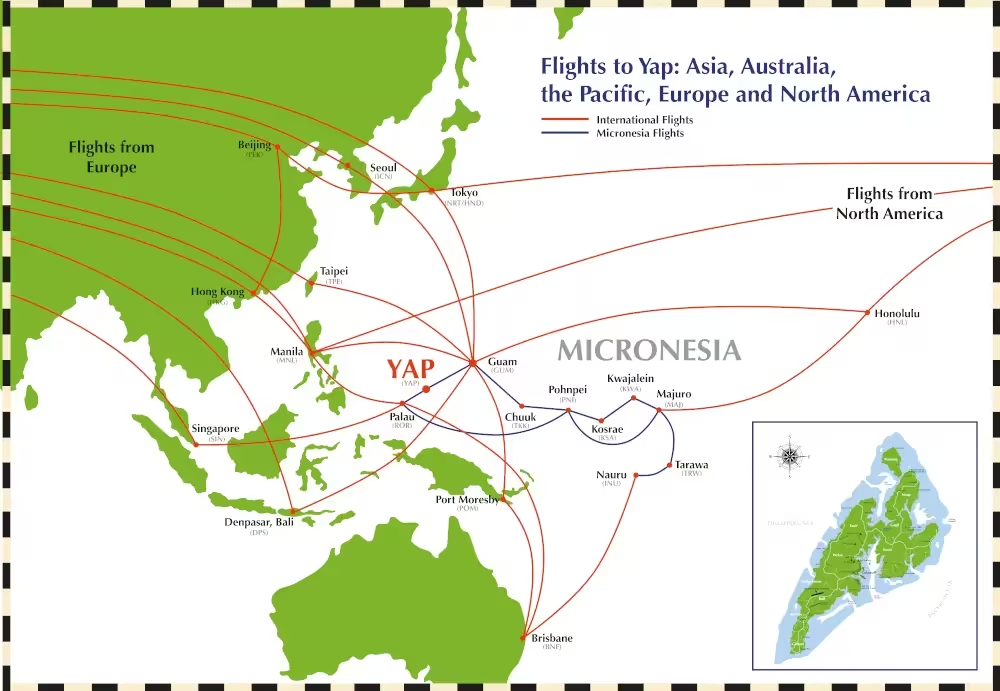
Yap is located in the Western Pacific, stretching from 6 to 10 degrees North Latitude and 137 to 148 degrees East Longitude in the Western
Caroline Islands. Yap is one of the four States that make up the Federated States of Micronesia and is some 450 miles southwest of Guam,
and 360 miles northeast of Palau.
Yap State consists of 134 islands and atolls of which 22 are populated, stretching across more than 100,000 square miles of total area. The main island of Yap is made up of four high volcanic islands and accounts for 38.7 of Yap’s total 49.7 square miles of land area. Colonia, the State's Capital and commercial center is located here. Most of the outer islands, stretching nearly 600 miles east of Yap Island, are coral atolls and are sparsely populated by people who are different from the Yapese in culture and language.
|
| |
(GMT + 10) - Yap is on the same time zone as Sydney, Australia, and one hour earlier than Tokyo, Japan. Yap is on the other side of the international date line from the United States, and on the same time zone as Guam, where "America’s Day Begins."
|
| |
Temperatures in Yap are moderate and fairly constant. Average temperature during the spring and summer months are 82 Fahrenheit Celsius, and 80 Fahrenheit Celsius during the fall and winter. Relative humidity ranges from 65 to 100 percent, with an annual average of 83 percent. Rainfall averages 120 inches a year, and is seasonal. The heaviest rains tend to occur in the summer months while the winter and spring trade wind season (marked by strong east to northeast winds) is relatively dry and often marked by drought. The transitional months of May, June and November are considered peak typhoon season. The average number of typhoons is three per year and severe storms can wreak massive devastation in the Outer Islands. The most damaging parts of storms tend to miss Yap proper, a fact which many people still attribute to the island’s strong "magic."
|
| |
There are four indigenous languages in Yap: Yapese, Ulithian, Woleian, and Satawalese. English is the common language of the FSM and is commonly spoken and understood. Many elderly Yapese are fluent in Japanese.
|
| |
International telephone calls to anywhere in the world can be made from Yap. IDD is offered at some hotels and the telecommunications office, which is open 24 hours a day and provides telephone, fax, e-mail, and telex services. The Yap Post Office is located in Colonia, and is a branch of the FSM Postal System, which is a part of the US Post Office System. Yap State issues its own postage stamps adorned with rich cultural representations and colorful floral designs which have made many first editions; much sought after collector’s items.
|
| |
Visas are not required for tourists of 30 days or less. You must have a valid Passport or documentation of Citizenship. All visitors must have an onward or return ticket. Entry authorization for longer than 30 days must be obtained in advance from Immigration and Labor, FSM National Government, Kolonia, Pohnpei, FSM 96941. |
| |
No immunizations are required unless coming from an infected area.
Prohibited are certain plants, fruits, animals, narcotics, and weapons. On the other hand, two bottles of liquor can be brought in duty
free.
Travel light. It never gets cold in Yap, so only lightweight clothing should be brought. Attire is very casual and formal wear is considered unnecessary and impractical. (A former Governor once proposed, establishing a law forbidding the wearing of ties in Yap!) Men will find slacks and a Hawaiian style shirt appropriate for the most formal occasion in Yap. A cap, shorts, light pants, sport shirts, and a T-shirt or two make a good basic wardrobe. Flip-flops (Zorries) are acceptable footwear anywhere on the island. Lightweight cotton dresses, blouses, and skirts make the best island wear for women.
In Yap, toplessness is common and socially acceptable, but it is considered highly offensive for women to bare their thighs in Public. Short shorts, bikinis, and miniskirts are a definite no-no.
These dress restrictions do not apply to women when diving or sunbathing on some private beaches, but bring a wraparound with you for when you get out of the water or leave the beach. Longer shorts, lavalavas, and slacks are also acceptable attire on most parts of the island.
|
| |
The official currency in Yap is the US Dollar. Yap is famous for its Stone Money which is still in use for traditional exchanges such as the purchase of land or in village ceremonies.
|
| |
There are two commercial banks in Yap, the Bank of the FSM and the Community Ayuw Credit Union. US currency is used. Credit cards are accepted by most hotels, but travelers checks are recommended for purchases at restaurants and for shopping.
|
| |
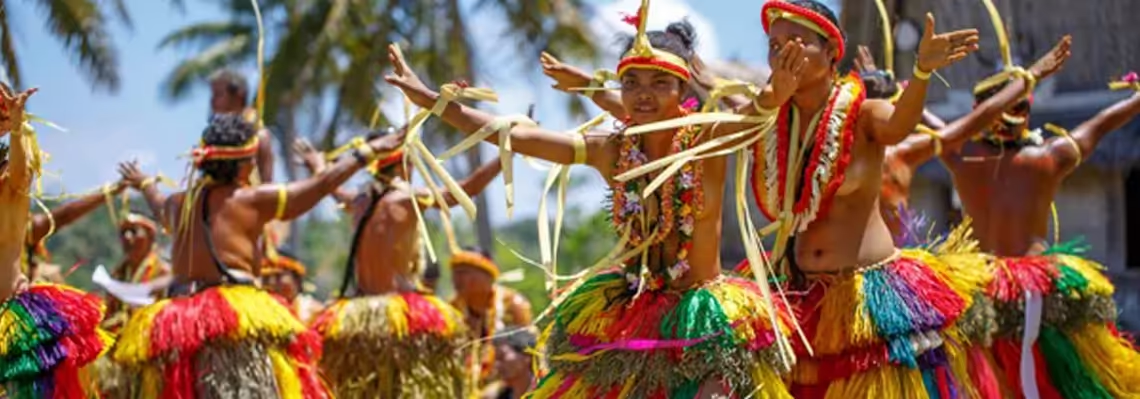
Yap Day - Annually observed in the first week of March.
FSM Constitution Day – May 10
UN Day – October 24
FSM Independence Day – November 3
Yap State Constitution Day – December 24
|
| |
Yap State Government operates a 48 bed hospital that is well stocked and professionally staffed. Intensive care and treatment of serious injuries must be conducted off island. Med-I-Vac services are available to Guam, Manila, Palau, or Hawaii.
|
| |
Standard 110 volt and US type outlets are used.
|
| |
Taxis are plentiful in Colonia and can be called to most locations on Yap Island. Visitors are welcome to use public buses which are used
primarily to transport students and government workers, which run between Colonia and the villages in the early morning and evening.
The stores in Colonia offer a variety of goods, including T-shirts with Yapese expressions, handy crafts, items of local manufacture such
as jewelry, and carvings and woven items which, by the way, make the perfect gifts to remember a visit to Yap.
|
| |
Business hours are normally from 7:30 – 4:30 p.m. Mondays through Fridays. On weekends most retail outlets are open with some limiting hours from 8:30 a.m. to 1:30 p.m. Banks and Government Offices are closed on weekends. Continental Micronesia is currently open for flight operations on Wednesdays, Thursdays, Fridays, and Sundays. Restaurants and Bars are open until 10:30 on weekdays and until 2a.m. on weekends. Drinking Permits - Visitors staying longer than 30 days are required to obtain a Yap State Alcoholic Beverage Drinking Permit, issued by the Chief of Police for a fee of $5.00. Good for a period of one year they prove to be a unique memento of a visit to Yap.
|
| |
You’ll want to catch the beauty of Yap on film, so do not forget to pack your camera or Videocam. Be forewarned that the kind of film or cassette you need may not always be available in the local stores so you may want to bring a few extra rolls or tapes. There are currently no film developing facilities on the island so you’ll have to wait until you get back home to see the great shots you took.
|
| |
The staple foods of the island are taro, yam, breadfruit, sweet potatoes, and coconut. The main source of protein are fish, crabs, clams, and pork. Restaurants offer local fare on their menus along with a wide selection of international dishes. |
| |
For a truly unique glimpse into the rich culture of Yap, Home-Stays with families in local villages can be arranged in advance by the Yap Visitors Bureau. If you are planning on staying with a local family during your visit to Yap, you may want to bring along a few photographs from your homeland and some small gifts for the family members.
|
| |
A trip to the Outer Islands is sure to be a memorable experience, but the logistics are complicated, and arrangements should be made at least six months in advance. Pacific Missionary Aviation operates regularly scheduled flights between the Yap Island and Ulithi Atoll, Fais Island, and Woleai. The Yap State Government Sea Transportation Office operates passenger and cargo service to all of Yap's outer islands on a monthly basis. The ship offers limited cabin accommodations and deck space for the hardy visitor.
Visits to Yap’s pristine outer islands can be arranged in advance by the Yap Visitors Bureau. |
| |
|
|
|
|
|
|
|
|