In traditional Oceanic cultures the art of body tattoos, called Gachow in Yapese, evolved as an integral part of social and spiritual customs of the island populations. The tattoos reflected status and lifestyle and marked significant milestones and achievements such as puberty, marriage and birth, a warrior’s prowess, social standing and individual preferences. Designs mimicked the natural world and order, and were a living tapestry of each individual’s life, and added as it was lived.
The process of tattooing involved a great deal of pain over long sessions, using bone and shell tools to pierce the skin, which was then rubbed with soot to create the intricate patterns.
Body tattooing reached a high level of development in Yapese culture. Full body tattoos represented the pinnacle of social status and could only be earned and bestowed within the cultural context. Many tattoo designs and patterns carried specific social and ceremonial significance and were defined by gender.
Yapese culture developed three distinct styles of tattoo. These were the upper body Yol patterns reserved for persons of high rank and chiefs, the Gachow tattoos applied to legs marking warrior prowess, skills and social standing, and the community Salbahjag designs worn by the general population, often decorative and reflecting personal preferences.
The practice of declined in the 19th-20th centuries due to negative colonial and missionary pressures, but is currently experiencing a revival across all Oceanic Cultures. On Yap a young local artist, Leo Pugram, was drawn to theses traditional designs and, with no traditional tattooists to teach him, studied old records and the living designs of his elders to teach himself the techniques and designs.
He started to bring the traditional tribal designs back to life, sketching and copying the designs into templates, He has also added his own elements, incorporating geometric patterns inspired by the handwoven baskets carried by Yapese men and women, the body patterns and markings of Yap’s prolific marine and bird life, native flowers, and developed stylized designs from the traditional Yapese outrigger canoe, sea turtles, sharks and the Manta Rays that inhabit Yap’s surrounding waters and coral reefs.
His work is popular with both locals and visitors to Yap, and one of his most requested designs is based in a traditional dolphin design that was worn by fisherman. It represents three dolphins racing side by side through the ocean and local folklore holds that a dolphin tattooed on the leg protects the wearer from shark attack… a ‘must-have ‘talisman for the many International sports divers visiting Yap each year.
Leo is Yap’s only commercial tattooist, but his interest goes beyond personal income and he is dedicated to reviving an ancient cultural art form that was almost lost. Traditionally, the giving and receiving of a tribal tattoo is a sacred event between the artist and the recipient of his art, a tradition observed by Leo with a moment of silence and reflection before work on each tattoo begins.
For more information please contact i
nfo@visityap.com.
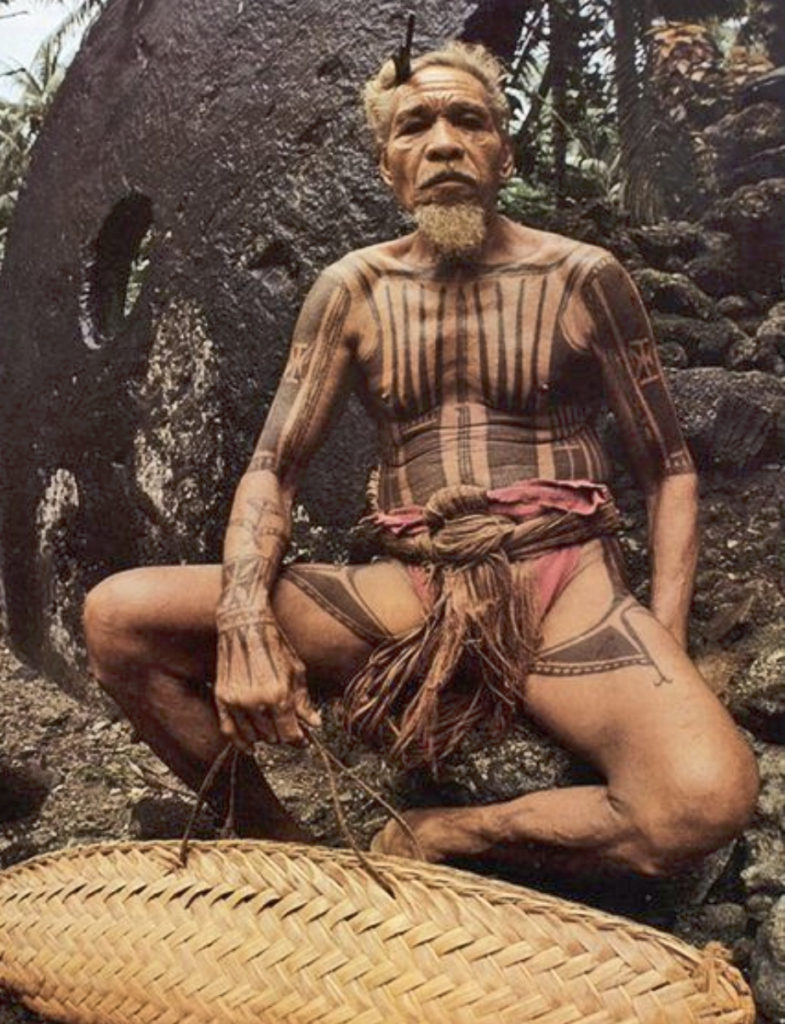
Dapoy, the last known Yapese to wear the traditional high-ranking full body tattoo
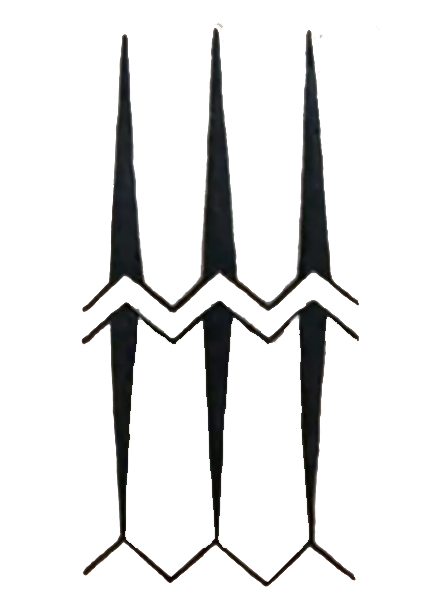
Pugram’s stylised adaption of the Yapese traditional Dolphin talisman tattoo
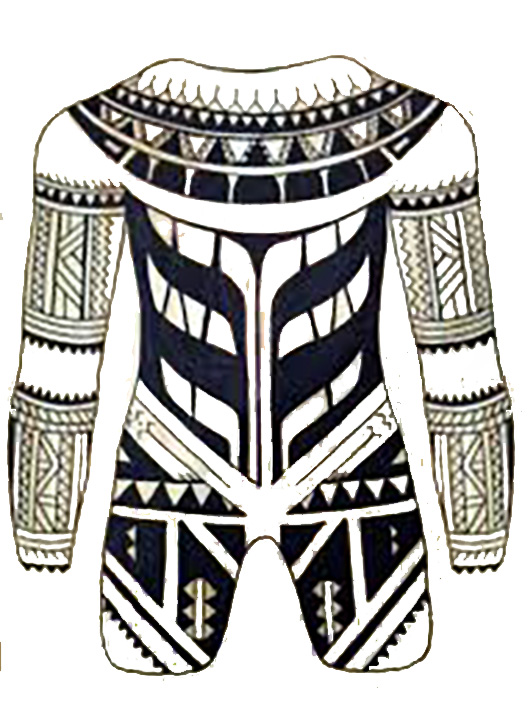
Archived drawing of a traditional Yapese full body tattoo